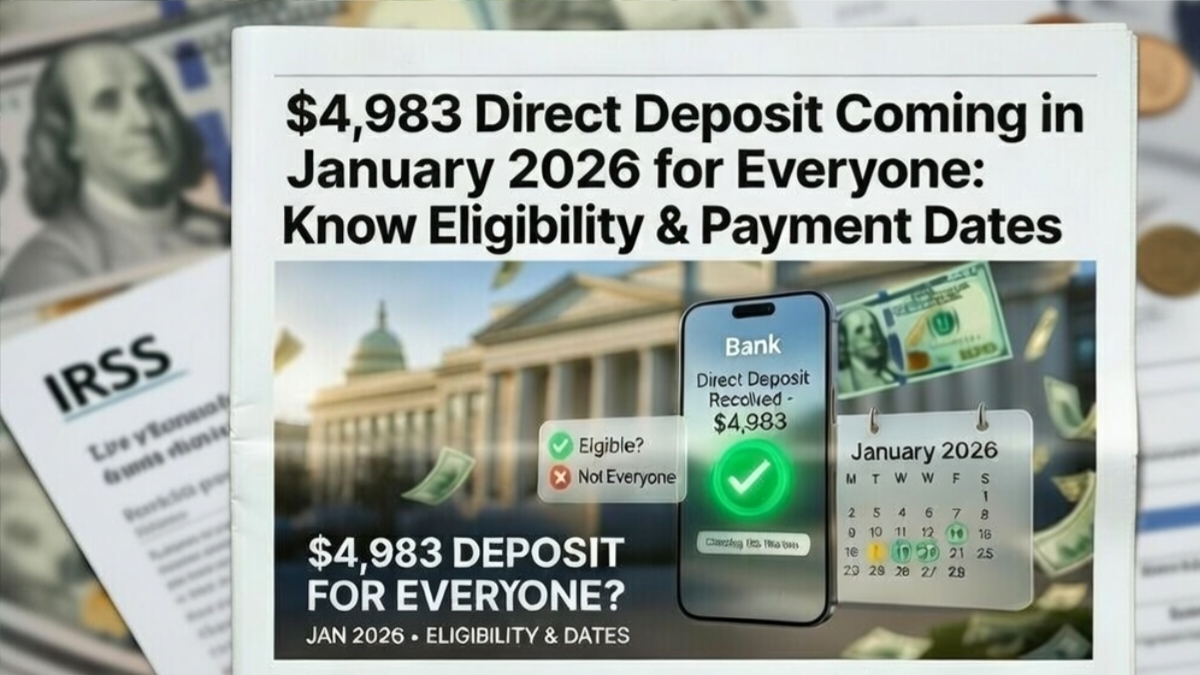
$4,983 Direct Deposit Coming in January 2026 for Everyone: As January 2026 approaches, many Americans are seeing online posts claiming a $4,983 direct deposit is coming. The figure has spread quickly across social media, benefit forums, and messaging apps. For households dealing with rising rent, medical bills, and daily expenses, the idea of a large government deposit naturally creates hope. However, the reality behind this number is more complex than viral posts suggest.
This $4,983 amount is not connected to a newly announced stimulus or universal federal payment. Instead, it reflects how existing benefit systems sometimes produce larger deposits when adjustments and corrections occur at the same time.
Why the $4,983 Amount Is Being Talked About
The attention around $4,983 comes from how multiple benefit updates can align in January. Annual cost-of-living adjustments, delayed payments, and recalculated benefits often take effect at the start of the year. When these are combined into one deposit, the total can appear unusually high for some recipients.

This type of situation has happened before. In previous years, similar discussions appeared when benefit recalculations or tax credit corrections were issued together. Inflation over recent years has made these adjustments larger, increasing both the payment amounts and public interest.
Not a New Stimulus Payment
Despite online claims, there is no confirmed nationwide $4,983 stimulus payment. No federal agency has announced a program that sends this amount to all citizens. Instead, the figure represents a possible combined outcome from programs that already exist, each with its own eligibility rules.
This means one person might receive a large January deposit while another receives nothing extra. The difference depends on benefit enrollment, income limits, and whether earlier payments were delayed or corrected.
Who May See a Larger January Deposit
Historically, retirees, people with disabilities, and low-income households enrolled in long-term assistance programs are more likely to see noticeable January adjustments. These programs often update benefits annually, which can result in higher deposits at the start of the year.
Some tax filers may also see larger deposits if credits were partially paid earlier and later reconciled. However, these situations are highly individual and should not be treated as guaranteed.
Why January Matters for Payments
January is an important month for benefit systems. New fiscal year rules begin, databases update, and agencies clear backlogs from the previous year. When these changes happen together, deposits can arrive earlier or appear larger because multiple adjustments are bundled into one payment.

Direct deposit remains the fastest method, but banking holidays and weekends can affect when funds appear. This staggered timing often adds to confusion online.
Staying Informed and Avoiding Misinformation
Claims about guaranteed large payments often leave out important details. Viral posts may present individual cases as universal benefits, leading to disappointment. Government agencies do not ask for personal information through unsolicited messages, and any such requests should be treated as suspicious.
The best approach is to rely on official agency updates and keep personal records accurate. Understanding how benefit systems work helps replace confusion with clarity.

Disclaimer
This article is for informational and educational purposes only. The $4,983 direct deposit discussed here is not a confirmed or universal payment. Eligibility, amounts, and timing depend on individual circumstances and official government program rules, which may change. Readers should consult official government sources or qualified professionals for guidance related to their specific situation.