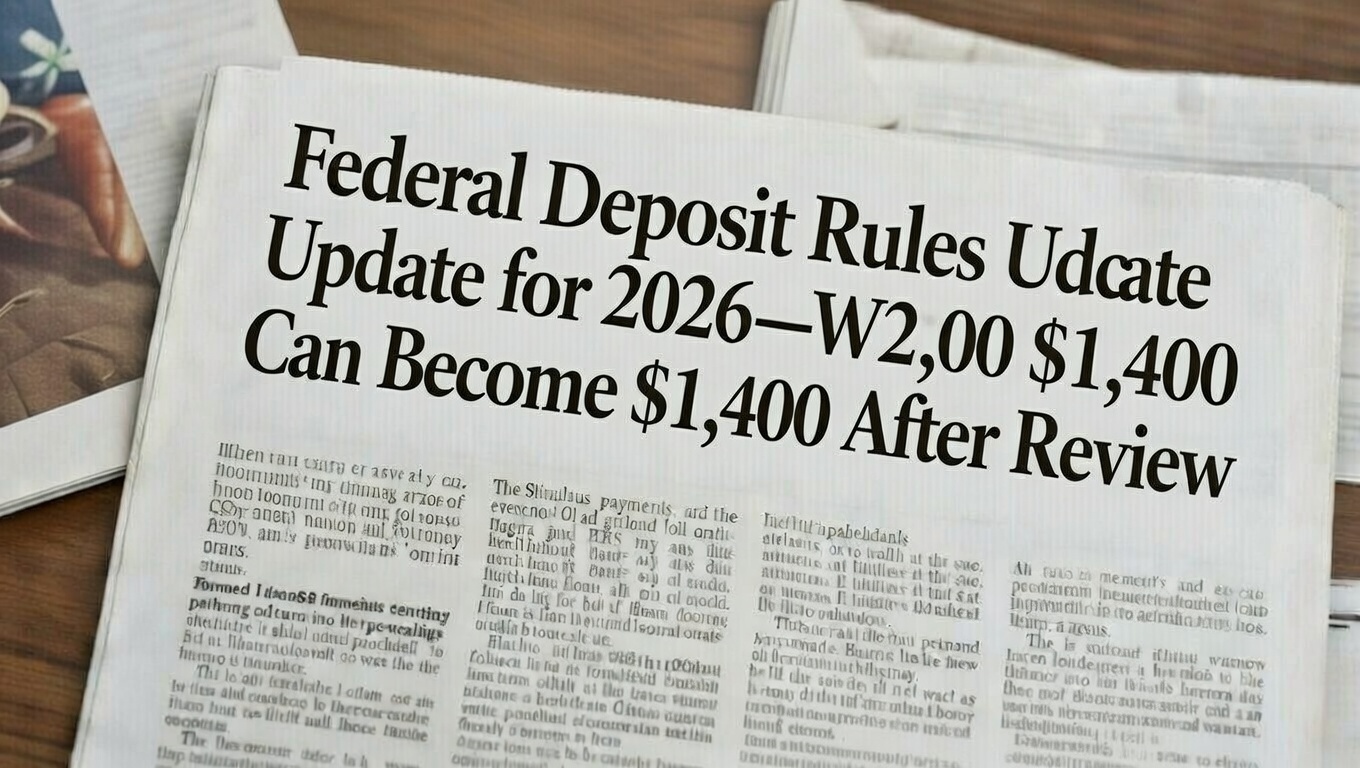
Many people across the country are feeling confused after expecting a federal deposit of $2,000 and then seeing a smaller amount arrive in their bank account. Instead of the full amount, deposits closer to $1,200 or $1,400 have appeared. This situation has caused concern, especially because online discussions and social media posts often suggest that everyone should receive the same payment.
The confusion is understandable, but in most cases, the lower amount does not mean the payment was cancelled or denied. Federal payment systems in 2026 are using stricter verification rules, which can change the final amount after review. Understanding how this process works helps explain why the deposit may be smaller than expected.
Why the Amount Changes After Processing
In many cases, the $2,000 figure people expect is only an estimated amount. This estimate appears before the system finishes checking all required information. Once processing begins, the payment is recalculated based on verified data rather than assumptions.
यह भी पढ़े:
 Social Security January 2026 Payments Are Earlier Than You Think-Check Your Exact Date Now
Federal systems now compare income records, household details, benefit history, and past tax filings more closely than before. If some information cannot be fully confirmed during the first review, the system adjusts the payment to match what it can verify at that moment. This often results in a lower deposit.
How Verification Checks Affect Payment Amounts
Verification checks play a major role in changing deposit amounts. Even small differences in records can trigger a recalculation. A recent change in filing status, an updated address, or a spelling difference in a name can delay full confirmation of eligibility.
Changes related to dependents are another common factor. If a dependent was added or removed recently, or if records do not match across systems, the payment may be reduced temporarily. The system approves only the portion it can confirm, which is why deposits often land between $1,200 and $1,400 instead of $2,000.

The Role of Offsets in Smaller Deposits
Offsets are another reason a deposit may be lower than expected. In certain cases, part of a federal payment is applied toward existing government-related balances. These can include past obligations that are already on record within federal systems.
When an offset is applied, the individual still receives a payment, but it is reduced by the amount used to cover that balance. This can make the deposit look unexpectedly small, even though the payment followed standard rules and procedures.
Partial Payments and Pending Reviews
Some federal payments are issued in parts rather than all at once. In these cases, the system releases a confirmed portion quickly and holds the remaining balance for further review. The first deposit may appear smaller, leading people to believe the payment is final.

In reality, additional verification may still be underway. Once reviews are completed, the remaining amount may be issued later. Many people are unaware of this process and assume the reduced deposit is the full and final payment.
Why This Situation Is More Common in 2026
In early 2026, more people are noticing these adjusted deposits because verification systems have become stricter. These changes were introduced to reduce errors and prevent fraud. While the goal is improved accuracy, it can make payments feel unpredictable.
People who recently changed jobs, moved to a new address, updated bank details, or experienced household changes are more likely to see adjustments. Any update increases the chance that records need additional review before the full amount is approved.

How Online Misinformation Adds to Confusion
Online discussions often worsen the confusion. Payment trackers, viral posts, and unofficial sources frequently present estimated amounts as guaranteed payments. When people see others talking about $2,000 deposits, they naturally expect the same.
However, federal payments are individualized. The final amount depends on verified information, not online claims. Relying on unofficial sources can lead to unrealistic expectations and unnecessary stress.
What to Do If Your Deposit Is Lower Than Expected
If you receive a federal deposit that is smaller than expected, it is best to treat it as a recalculated result rather than a rejection. Reviewing recent life changes can often explain the adjustment. Checking official notices linked to your account may provide additional details.
It is also important to remain patient. If the deposit was partial, additional funds may still be pending. Monitoring official federal communications instead of social media rumors helps provide clarity.
Final Thoughts
Seeing a $1,200 or $1,400 deposit instead of an expected $2,000 can be disappointing, but it usually reflects verification and recalculation rather than a loss of benefits. Federal systems in 2026 are prioritizing accuracy, which sometimes means issuing adjusted or partial payments.
Understanding this process helps reduce confusion and anxiety. Staying informed, reviewing official updates, and avoiding misinformation are the best ways to navigate federal payments during this period.
Disclaimer
This article is for general informational purposes only and does not provide financial, tax, or legal advice. Federal payment amounts, eligibility rules, and processing timelines may vary based on individual circumstances and official policies. Readers should consult official federal agency communications or qualified professionals for guidance specific to their situation.